Why Dark Circles Keep Coming Back
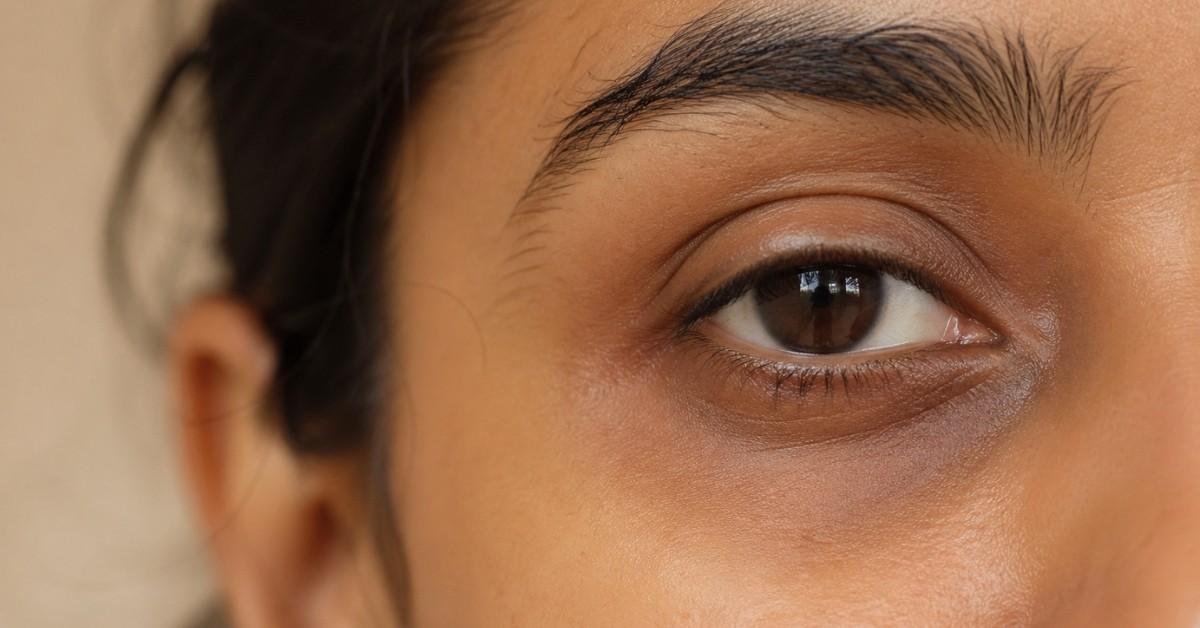
You've tried sleeping more. You drink your water. You've used the eye creams, the cold spoons, the cucumber slices. And yet, every morning, the dark circles are still there.
The reason most dark circle treatments fail isn't that they don't work. It's that people are treating the wrong type.
Dark circles are not one condition. They are three — and each has a completely different cause, a different appearance, and a different solution.
The Three Types of Dark Circles
Understanding which type you have is the first step to actually fixing them.
Vascular (Blue or Purple Tint)
This type appears bluish or purplish and is caused by blood pooling in the fine vessels beneath the thin skin around the eyes. The skin around the eyes is some of the thinnest on the body — often less than 0.5mm — which makes underlying vessels far more visible here than anywhere else.
Common triggers include poor sleep, alcohol, dehydration, seasonal allergies, and prolonged screen exposure. These darken and dilate the blood vessels, making them more prominent through the skin.
This is the type that responds best to lifestyle changes — but only up to a point.
Pigmented (Brown or Dark Brown Tint)
This type is driven by melanin — excess pigmentation in the skin under the eyes. It is significantly more common in people with darker skin tones, including Indian skin, because melanin-producing cells are more reactive to triggers like UV exposure, inflammation, and friction.
Rubbing your eyes, wearing contact lenses, certain skincare products, and sun exposure can all trigger post-inflammatory hyperpigmentation in this delicate area.
This is the type that home remedies address least effectively, and the one that requires targeted, clinical treatment to improve.
Structural (Dark Shadows, Hollowness)
This type isn't really a colour change at all — it's a shadow. As we age, the fat pads under the eyes diminish and the skin loses collagen, causing a hollowing effect called the tear trough. Light falls into this hollow and creates a shadow that reads as a dark circle.
No topical product can restore volume. No amount of sleep will rebuild lost collagen. This type is structural, and it requires a structural solution.
Why Most Products Don't Work
Most eye creams, serums, and home remedies are designed around the vascular type — reducing puffiness, improving circulation, and providing temporary brightening. They are not formulated to address excess melanin or volume loss.
If you have pigmented or structural dark circles, no amount of caffeine-infused eye cream will make a lasting difference. The product is simply not addressing the cause.
This is why dark circles keep coming back — not because your routine is wrong, but because the solution doesn't match the problem.
The Indian Skin Factor
For most people in India, dark circles are primarily pigmented — driven by hyperpigmentation rather than vascular pooling or volume loss.
Indian skin has higher melanin density, which makes it more prone to post-inflammatory pigmentation. The under-eye area is particularly vulnerable because:
It is frequently rubbed (due to allergies, contact lenses, or habit)
It receives sun exposure that most people don't protect against
It reacts to inflammation from seasonal allergies, which are common in humid climates like Kerala
This also means that treatments designed for lighter skin tones — many of which target vascular dark circles — may not be effective for Indian skin types at all.
What Actually Helps Each Type
For Vascular Dark Circles
Consistent, quality sleep (7 to 9 hours)
Reducing alcohol and increasing hydration
Managing allergies, which cause blood vessel dilation
SPF around the eye area daily
Topical ingredients like vitamin K, caffeine, and niacinamide can help mildly
For Pigmented Dark Circles
Broad-spectrum SPF daily — this is non-negotiable
Topical ingredients like vitamin C, kojic acid, and retinoids can gradually reduce pigmentation over time
Chemical peels targeting the under-eye area
Laser treatments targeting melanin specifically
Professional assessment to rule out contact dermatitis or allergy-driven pigmentation
For Structural Dark Circles
Skin boosters or hyaluronic acid fillers to restore volume to the tear trough
Collagen-stimulating treatments like microneedling or MnRF
SPF and antioxidants to slow further collagen loss
When Home Remedies Are Not Enough
Home remedies work best for mild, vascular dark circles in younger skin — and even then, the results are temporary.
If your dark circles have been present for years, worsen despite good sleep and hydration, are noticeably brown or hollow in appearance, or run in your family — they are unlikely to resolve with lifestyle changes alone.
Persistent dark circles, especially the pigmented and structural types, require clinical assessment and targeted treatment. The right approach depends entirely on identifying which type you have — something that requires a trained eye.
How Skindays Approaches Dark Circles
At Skindays Clinic, we begin by identifying exactly what type of dark circles you have — because the treatment plan looks completely different for each one.
We assess:
Skin tone and melanin activity in the under-eye area
Degree of vascular visibility through the skin
Volume loss and structural changes with age
Lifestyle and environmental triggers
From there, we recommend a treatment plan that is specific to your type — whether that involves targeted topical therapy, a clinical procedure, or a combination approach.
Treating dark circles without this assessment is the reason most people see disappointing results.
The Circles Are Not the Problem. The Cause Is.
Dark circles that keep coming back are trying to tell you something. Not about how tired you are — but about what your skin actually needs.
Getting the right diagnosis is the first step toward results that actually last.
Book a consultation at Skindays Clinic and find out which type of dark circles you have and what will actually help.