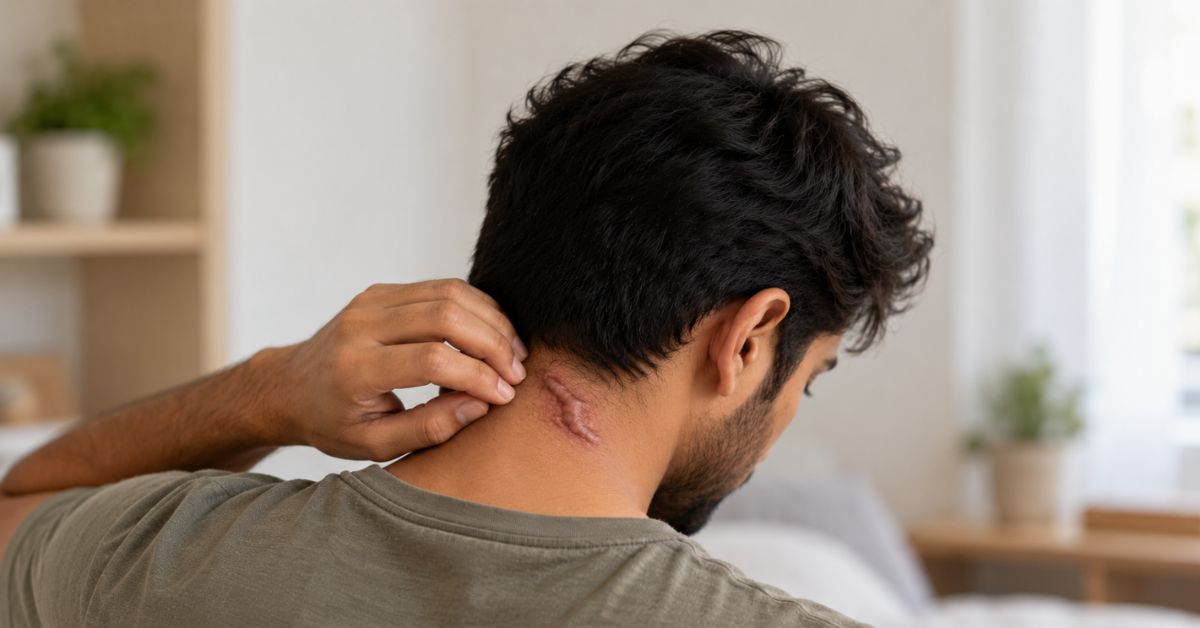
Psoriasis: What It Is and How It Is Managed

Psoriasis is one of the most misunderstood skin conditions in dermatology. Many people who have it spend years treating it as a dryness problem, a hygiene issue, or an allergy and getting nowhere. Because psoriasis is none of those things.
It is a chronic autoimmune condition. And understanding that changes everything about how it is approached.
What Is Psoriasis?
Psoriasis is a condition in which the immune system sends faulty signals that dramatically speed up the skin's cell cycle. Normal skin takes about 28 to 30 days to produce new cells and shed old ones. In psoriasis, that process happens in 3 to 4 days.
Skin cells accumulate on the surface faster than the body can shed them, forming the thick, raised, scaly patches that are the hallmark of the condition. These patches, called plaques, are most commonly found on the scalp, elbows, knees, and lower back but psoriasis can appear anywhere on the body.
It is not contagious. It is not caused by poor hygiene. And it cannot be cured with moisturiser.
Why Does It Happen?
Psoriasis is driven by the immune system, not the skin itself. The skin is showing the symptoms of an internal immune response gone wrong.
Genetics plays a significant role. Psoriasis runs in families, and certain gene variants are strongly associated with the condition. However, having the genetic predisposition does not mean psoriasis will develop. It usually requires a trigger.
Common triggers include:
Stress — one of the most significant and consistent triggers
Infections — particularly streptococcal throat infections, which can trigger a type called guttate psoriasis
Certain medications — including some blood pressure drugs and anti-malarials
Skin injury — cuts, burns, or excessive scratching can trigger a flare in the affected area, a response known as the Koebner phenomenon
Alcohol and smoking — both known to worsen severity and reduce treatment response
Hormonal changes — particularly in women, around puberty, pregnancy, and menopause
Types of Psoriasis
Not all psoriasis looks the same. The most common type is plaque psoriasis, but several others exist.
Plaque psoriasis
is the most common form, characterised by raised, red, scaly patches with a silvery surface, most often on the scalp, elbows, and knees.
Guttate psoriasis presents as small, drop-shaped lesions appearing suddenly, often triggered by a streptococcal infection. More common in children and young adults.
Inverse psoriasis affects skin folds such as the armpits, groin, and under the breasts. It appears as smooth, red, inflamed patches without the typical scaling.
Pustular psoriasis is characterised by white pustules surrounded by red skin. It can be localised to the hands and feet or more widespread.
Scalp psoriasis affects the scalp and often extends to the hairline, forehead, and behind the ears. It is frequently mistaken for severe dandruff.
Psoriatic arthritis affects the joints in some people, causing pain, stiffness, and swelling. This is a serious complication that requires both rheumatological and dermatological care.
Is It Just a Skin Condition?
This is where many people misunderstand psoriasis. Because it is an immune-mediated condition, its effects are not limited to the skin.
People with psoriasis have a higher risk of developing psoriatic arthritis, cardiovascular disease, metabolic syndrome, and depression. The chronic, visible nature of the condition also has a significant psychological impact, affecting self-esteem, relationships, and quality of life in ways that go well beyond physical discomfort.
This is why psoriasis is managed as a whole-body condition, not just a skin complaint.
How Is Psoriasis Managed?
There is currently no permanent cure for psoriasis. However, it can be effectively managed, and with the right treatment plan, many people achieve long periods of clear or nearly clear skin.
Treatment depends on the type, severity, and location of psoriasis, as well as the patient's overall health and lifestyle.
Topical treatments are typically the first line for mild to moderate psoriasis. These include corticosteroid creams, vitamin D analogues, and retinoids applied directly to the plaques to reduce inflammation and slow cell turnover.
Phototherapy uses controlled UV light exposure to slow the rapid skin cell cycle. It is effective for moderate psoriasis and is administered in a clinical setting under professional supervision.
Systemic treatments are used for moderate to severe psoriasis that does not respond to topical or light therapy. These include oral medications that work on the immune system to reduce the overactive response driving the condition.
Biologics are a newer class of targeted treatments that block specific immune pathways involved in psoriasis. They are highly effective for severe cases and have transformed outcomes for patients who previously had limited options.
Lifestyle management also plays a role. Identifying and avoiding personal triggers, managing stress, maintaining a healthy weight, and avoiding alcohol and smoking all contribute to better disease control.
Why Psoriasis Needs a Dermatologist
Self-managing psoriasis with over-the-counter creams or home remedies rarely produces meaningful results, and in some cases makes the condition worse, particularly when strong topical steroids are used without guidance.
Because psoriasis is a chronic condition that fluctuates over time, treatment needs to be adjusted as the condition changes. What works during a flare is different from what maintains remission. And monitoring for complications like psoriatic arthritis requires professional oversight.
A dermatologist does not just prescribe a cream. They assess the type and severity of your psoriasis, identify your triggers, monitor how you respond to treatment, and adjust the plan over time.
How Skindays Approaches Psoriasis
At Skindays Clinic, we assess each patient individually because psoriasis presents differently from person to person and requires a treatment plan built around your specific type, severity, and triggers.
If you have been living with psoriasis and feel like nothing has worked, the right diagnosis and a structured treatment plan can make a significant difference.
Book a consultation at Skindays Clinic and get a proper assessment of your psoriasis and a plan that goes beyond surface-level treatment.