Carbon Peel or Chemical Peel: Which Is Better for Your Skin Concerns?
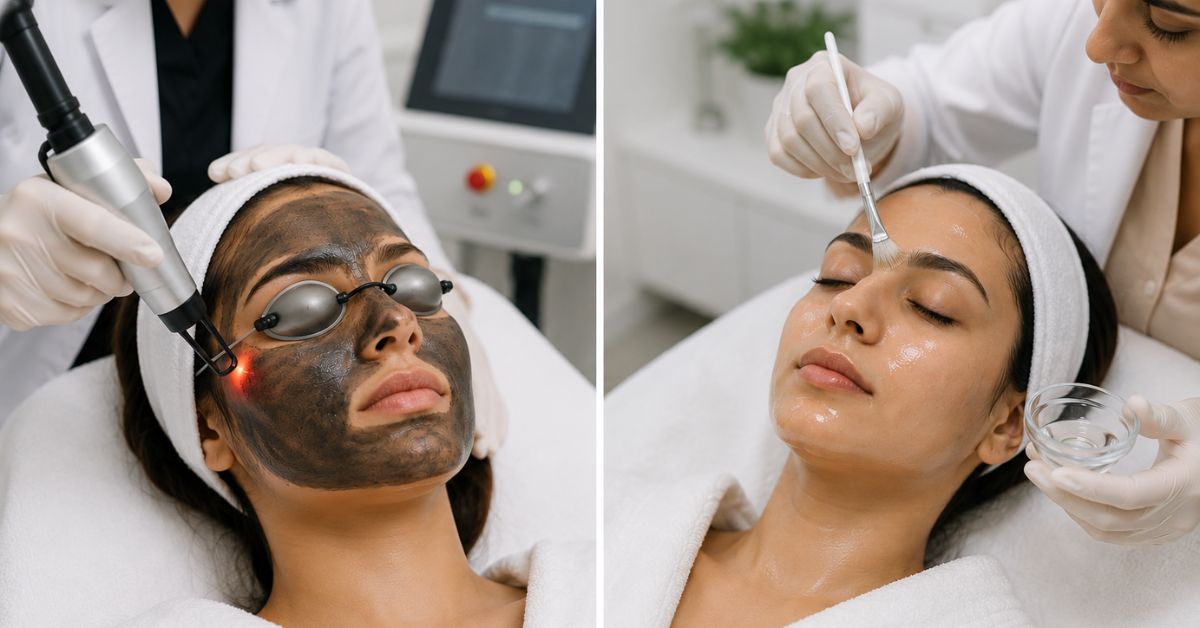
With so many skin treatments available today, it can be difficult to know which one is right for your concerns. Two of the most commonly recommended options are Carbon Peels and Chemical Peels. While both can improve the appearance of your skin, they work in very different ways and are designed to address different concerns.
Understanding the differences can help you choose the treatment that delivers the best results for your skin.
What Is a Carbon Peel?
A Carbon Peel, often called the "Hollywood Facial," is a laser-based treatment that combines a medical-grade carbon lotion with laser technology.
During the procedure, a thin layer of carbon is applied to the skin. The carbon absorbs oil, dirt, and impurities from the pores. A laser is then used to target and remove the carbon particles along with dead skin cells and excess oil.
The treatment is known for being quick, comfortable, and requiring little to no downtime.
Carbon Peels Are Commonly Used For:
Oily skin
Enlarged pores
Blackheads and congestion
Mild acne
Dull skin
Uneven skin texture
Many people notice an immediate improvement in skin smoothness and brightness after treatment.
What Is a Chemical Peel?
A Chemical Peel uses carefully selected acids to exfoliate the outer layers of the skin. Depending on the type and strength of the peel, it can target concerns ranging from mild dullness to deeper pigmentation and acne scarring.
Chemical peels work by accelerating cell turnover, encouraging fresh skin cells to replace damaged ones.
Chemical Peels Are Commonly Used For:
Pigmentation
Melasma
Acne and post-acne marks
Sun damage
Uneven skin tone
Fine lines and early signs of aging
Unlike Carbon Peels, some chemical peels may involve a few days of visible peeling and recovery.
How Do They Differ?
Although both treatments aim to improve skin quality, their mechanisms and outcomes are different.
Carbon Peel | Chemical Peel |
|---|---|
Uses laser technology | Uses exfoliating acids |
Targets surface oil and congestion | Targets pigmentation and skin renewal |
Minimal downtime | Downtime varies depending on peel strength |
Ideal for oily and acne-prone skin | Ideal for pigmentation and uneven tone |
Instant refreshed appearance | Results develop over several days or weeks |
Suitable before events | Better suited for corrective treatment plans |
Which Treatment Is Better for Acne?
The answer depends on the type of acne.
For active oily skin with blackheads, enlarged pores, and congestion, a Carbon Peel can help reduce oil production and improve skin clarity.
For acne marks, post-inflammatory pigmentation, and recurring breakouts, Chemical Peels may offer better long-term improvement by promoting controlled exfoliation and skin renewal.
In many cases, dermatologists combine both approaches at different stages of treatment.
Which Is Better for Pigmentation?
When it comes to pigmentation, Chemical Peels generally have an advantage.
Certain peels are specifically formulated to target:
Post-acne pigmentation
Sun-induced pigmentation
Uneven skin tone
Melasma
However, deeper or stubborn pigmentation may require additional treatments such as laser therapy, depending on the cause and depth of pigment.
Which Treatment Gives More Glow?
Both treatments can improve skin radiance, but in different ways.
A Carbon Peel delivers an immediate refreshed appearance by clearing surface debris, oil, and congestion.
A Chemical Peel improves glow gradually by encouraging healthier cell turnover and reducing uneven pigmentation.
If your goal is a quick skin refresh before an important occasion, a Carbon Peel may be the better choice. If your goal is long-term correction and skin improvement, a Chemical Peel may provide greater benefits.
Can Sensitive Skin Have These Treatments?
Not every treatment suits every skin type.
Sensitive or reactive skin requires careful assessment before either procedure. Factors such as barrier health, existing inflammation, rosacea, eczema, or recent use of active ingredients can influence treatment selection.
This is why a professional consultation is important before deciding between a Carbon Peel and a Chemical Peel.
Do You Need Just One Session?
Most people benefit from a series of treatments rather than a single session.
The number of sessions depends on:
Your skin concern
Severity of the condition
Skin type
Treatment goals
While some people notice visible improvement after one treatment, long-term results typically require a personalised treatment plan.
So, Which One Is Right for You?
There is no universally "better" treatment. The right choice depends entirely on your skin concern.
A Carbon Peel may be ideal if you struggle with:
Oily skin
Enlarged pores
Congestion
Dullness
A Chemical Peel may be more suitable if you are concerned about:
Pigmentation
Acne marks
Uneven skin tone
Early signs of aging
The most effective treatment is not necessarily the newest or most popular one. It is the treatment that matches your skin's needs.
Final Thoughts
Carbon Peels and Chemical Peels both have an important place in modern dermatology. While they may seem similar at first glance, they target different concerns and produce different results.
Choosing the right treatment requires understanding not only your skin concern but also your skin type, sensitivity, lifestyle, and long-term goals.
At Skindays Clinic, we assess each patient's skin individually before recommending a treatment plan. Sometimes that plan includes a Carbon Peel, sometimes a Chemical Peel, and sometimes a combination of treatments designed specifically for your skin.
If you're unsure which option is right for you, a professional skin consultation is the best place to start.