Can a Tattoo Be Completely Removed? What You Need to Know
Tattoos are designed to be permanent. The ink is placed deep enough in the skin that the body cannot naturally clear it, which is exactly what makes removal a more involved process than most people expect.
The honest answer to the question is: yes, complete removal is possible. But the outcome depends on several factors, and understanding them upfront helps you go in with the right expectations.
How Laser Tattoo Removal Actually Works
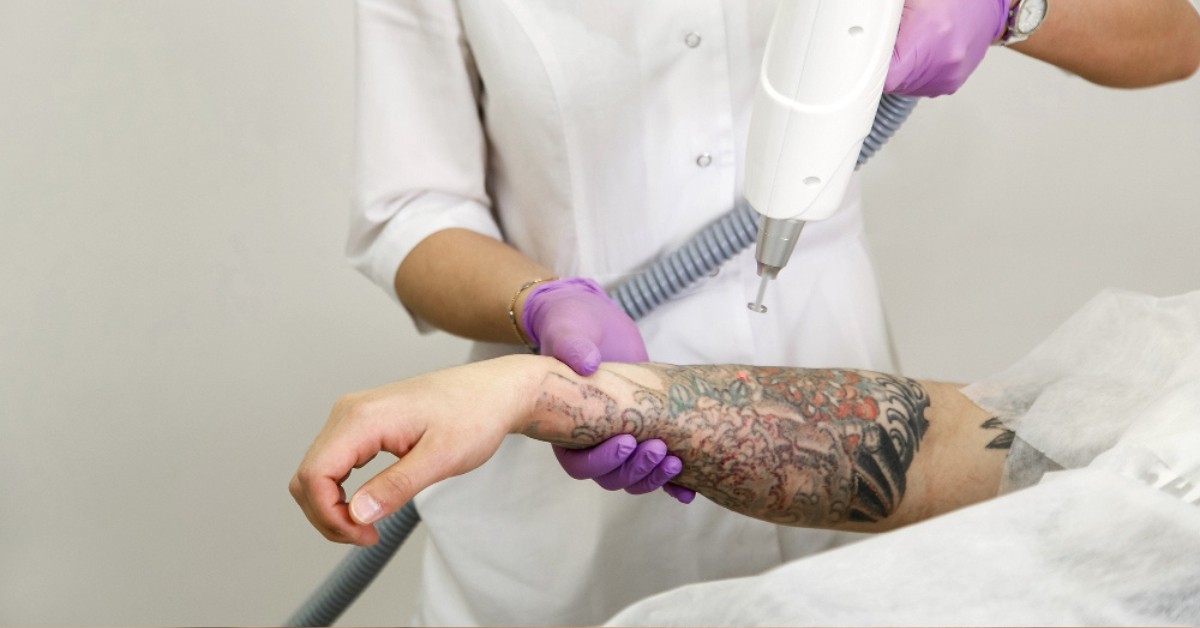
The laser doesn't burn or cut the tattoo out. What it does is break the ink down.
Tattoo ink particles are too large for the body's immune system to process on its own, which is why tattoos are permanent in the first place. A laser delivers precisely targeted pulses of energy that shatter these large ink particles into fragments small enough for the body to recognise and clear away naturally through the lymphatic system.
This is why results are gradual. Each session breaks down another layer of ink. Between sessions, the body does the work of flushing those fragments out. Over multiple sessions, the tattoo progressively fades and in many cases, disappears entirely.
Will Your Tattoo Be Completely Removed?
This is the most important question, and the answer depends on several variables.
Ink colours
Black and dark blue inks respond best to laser treatment because they absorb the most laser energy. Lighter colours, particularly greens, yellows, and whites, are significantly more resistant and may require more sessions or may only partially fade.
Ink depth and density
Professional tattoos are applied with consistent depth and density, which actually makes them more predictable to treat. Amateur tattoos can have uneven ink distribution, which sometimes makes them harder to clear fully.
Tattoo age
Older tattoos are generally easier to remove. Over time, ink naturally disperses slightly within the skin, making it more responsive to laser treatment. A fresh tattoo typically requires more sessions than one that is several years old.
Skin tone
In darker skin tones, including most Indian skin types, the laser settings need to be carefully calibrated. The laser targets pigment, and in darker skin, there is more melanin in the surrounding skin that needs to be protected. This doesn't mean removal isn't possible, but it does mean that clinical expertise matters significantly.
Location on the body
Areas with better circulation, closer to the heart, tend to respond faster to treatment because the immune system clears fragmented ink more efficiently. Tattoos on the hands, feet, and ankles typically take longer.
How Many Sessions Will You Need?
There is no universal answer, but a realistic estimate for most professional tattoos is 6 to 10 sessions, spaced 6 to 8 weeks apart.
Sessions need to be spaced out to allow the body adequate time to flush ink particles between treatments. Rushing the process by reducing the gap between sessions does not speed up results. It only increases the risk of skin damage.
Smaller, simpler, and older tattoos may clear in fewer sessions. Larger tattoos with multiple colours or dense shading will require more. A clinical assessment before starting treatment is the only reliable way to estimate your specific timeline.
What Does the Treatment Feel Like?
Most people describe the sensation as similar to a rubber band snapping against the skin. The discomfort is brief and localised to each laser pulse.
A topical numbing cream is applied beforehand to minimise discomfort. Sessions are relatively short, typically 15 to 30 minutes depending on the size of the tattoo.
After the session, it is normal to experience:
Redness and mild swelling in the treated area
A frosting effect on the skin surface, which fades within hours
Mild scabbing or peeling over the following days
These are all expected parts of the healing process, not complications.
Pre and Post-Care: What to Keep in Mind
Before your session:
Avoid sun exposure to the tattooed area for at least one week prior
Do not apply creams, oils, or any topical product on the area on the day of treatment
Inform your doctor about any medications you are currently taking
After your session:
Apply the prescribed healing ointment for 3 to 5 days
Do not pick or scratch any scabbing, as this increases the risk of scarring
Keep the area protected from sun exposure and apply SPF on any exposed skin
Avoid swimming, saunas, and intense workouts for 48 hours
What About Tattoo Cover-Ups?
Not everyone wants complete removal. Many people choose laser treatment specifically to lighten a tattoo enough for a cover-up design to work effectively.
A significantly faded tattoo gives the tattoo artist more flexibility with the new design, better colour, less restriction, and a cleaner result. Fewer sessions are needed for lightening than for complete removal, which also means a shorter and more affordable treatment course.
If a cover-up is your goal, let your doctor know from the start so the approach and target outcome can be planned accordingly.
Is Laser Tattoo Removal Safe for Indian Skin?
Yes, when performed correctly. The key is using the right laser technology and adjusting settings appropriately for your skin tone.
Indian skin has higher melanin density, which means an incorrectly calibrated laser can affect the surrounding skin rather than just the ink. In experienced hands, with the right equipment, tattoo removal is safe and effective across all skin tones.
This is one of the reasons choosing a qualified dermatology clinic over an unregulated parlour or salon matters significantly for tattoo removal. The risk of hyperpigmentation or scarring is real when treatment is done without proper clinical oversight.
How Skindays Approaches Tattoo Removal
At Skindays Clinic, we begin with a thorough assessment of your tattoo, including its age, size, colour composition, ink depth, and your skin type, before recommending a treatment plan.
We use advanced laser technology calibrated specifically for each session based on how your skin and the tattoo are responding to treatment. The goal is effective ink clearance with minimal impact on the surrounding skin.
Whether your aim is complete removal or lightening for a cover-up, we build a plan around your specific outcome and give you a realistic picture of what to expect before we begin.
The Right Expectations Make All the Difference
Laser tattoo removal works. But it is a process — not a single session solution.
Understanding how many sessions you may need, what factors affect your outcome, and what the healing process looks like will help you approach treatment with confidence rather than frustration.
Thinking about removing a tattoo? Book a consultation at Skindays Clinic and get a clear, honest assessment of what your removal journey will look like.